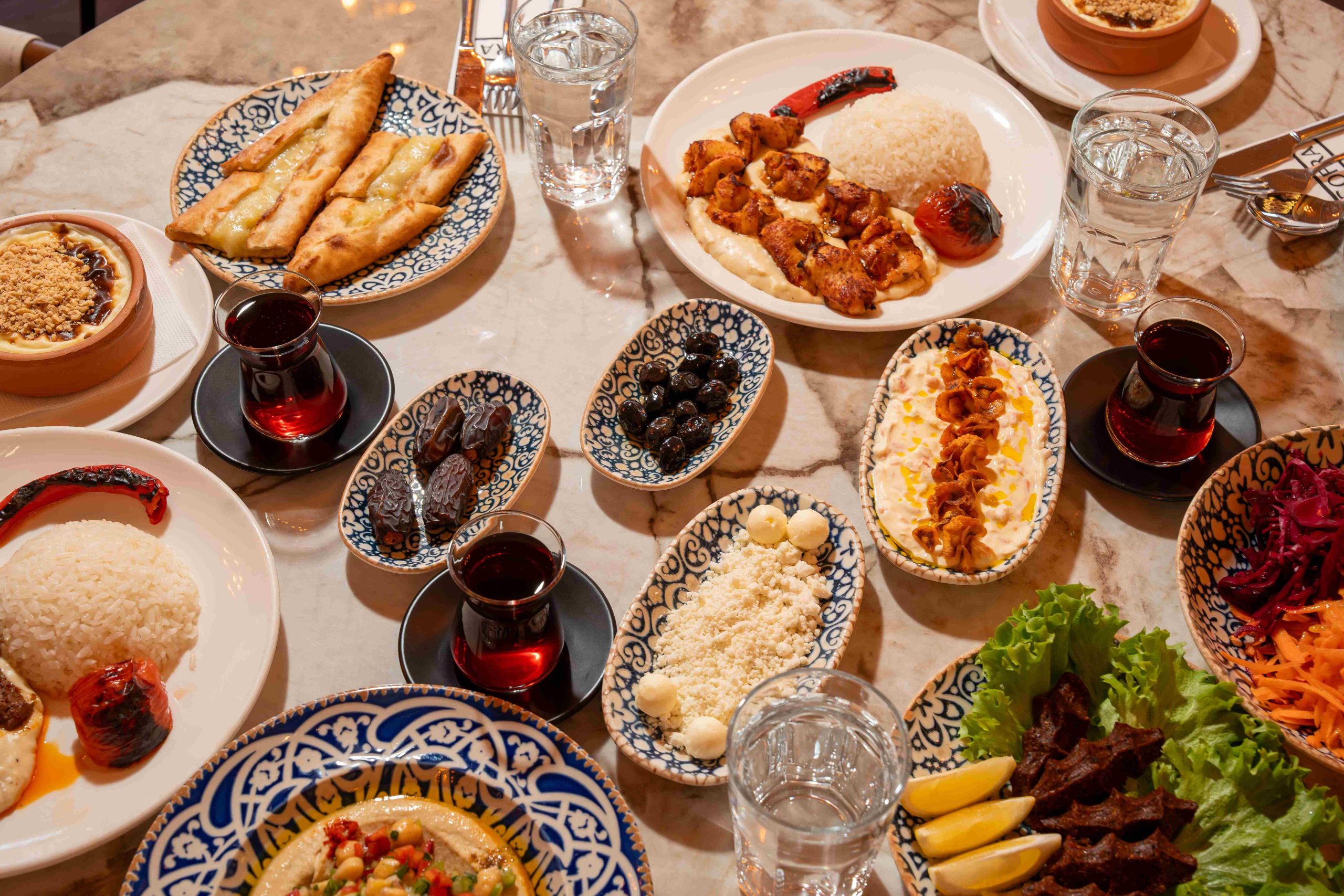
Authentic Turkish food is renowned for its rich cultural heritage, its bold flavors, and its deep-rooted traditions. It may resemble Mediterranean food such as Greek, Lebanese, or Italian cuisine, but it is quite distinct because of the influence of the Ottomans, the regional diversity, and the increased use of meat and spices in its preparation. Turkish cuisine is more complex, more satisfying, and also has more history and relevance in everyday culture than simple Mediterranean cuisine, which uses olive oil.
The identity is well displayed in restaurants, for example in Bebek Restaurant, where Turkish national dishes are served without changing their authentic flavor in a modern restaurant atmosphere.
Historical and Cultural Roots of Turkish Cuisine
The authentic Turkish food stems from the Ottoman Empire, which had embraced the traditions of the Middle East, Central Asia, the Balkans, and the Mediterranean. This resulted in a cuisine that is even richer than some of the regional Mediterranean cuisines.
Key cultural influences include:
- Ottoman palace cooking traditions
- Central Asian meat-based habits
- Middle Eastern spice blending
- Balkan pastry and dairy influence
- Mediterranean vegetable and olive oil dishes
Turkish cuisine is not as simple as other regional cuisines, but it has been influenced by centuries of cultural exchanges and has also developed into a complex imperial cuisine.
The richness is evident in the Bebek Restaurant, where traditional influences remain evident in the modern menu items.
Why Authentic Turkish Food Feels Different in Everyday Dining
The brilliance of Turkish cuisine is not only its history, though it is how all of these influences are combined in regular meals. The cuisine is quite distinct from other Mediterranean dishes because of the spices used and how they are prepared and consumed.
This difference becomes more visible when looking at its core food elements below.
Flavor Profile and Spices
- Cumin adds earthy depth
- Sumac brings tangy freshness
- Paprika gives warmth and color
- Black pepper balances overall taste
These spices add depth of flavor rather than light seasoning.
Meat, Dairy, Bread, and Meze Culture
- Grilled meats like Adana and shish kebab
- Döner variations across regions
- Yogurt used in marinades and sauces
- Charcoal grilling for smoky flavor
- Fresh breads like pide and simit
- Wide variety of meze dishes
- Strong culture of shared dining
These are a few of those traditional elements that can be witnessed at a modern restaurant like Bebek Restaurant.
Desserts and Regional Diversity
- Baklava as a signature dessert
- Künefe with rich syrup and cheese
- Sütlaç as a traditional rice pudding
- Aegean cuisine focuses on olive oil dishes
- Southeast cuisine is spicier and meat-heavy
- Black Sea region uses corn and seafood
- Central Anatolia highlights wheat and dairy dishes
Dining Experience and Modern Influence
Hospitality and togetherness are both strongly rooted in Turkish dining traditions. Meals are also long, communal, and multi-course.
Cultural dining style:
- Family-style sharing meals
- Slow and social dining experience
- Strong hospitality traditions
The tradition is still practiced and displayed in modern restaurants, such as Bebek Restaurant, without losing its cultural identity.
Conclusion
In conclusion, authentic Turkish food is different from other Mediterranean cuisines because of its Ottoman roots, unique flavors, and local variety. Turkish cuisine brings flavor, traditional culinary methods, and the culture of sharing meals as well, in order to improve the experience. It’s not just unique; it’s traditional too, and it’s all about hearty food and a strong cultural identity rather than lighter Mediterranean styles.